
YouTube Analytics Explained: 15 Metrics That Actually Matter for Channel Growth
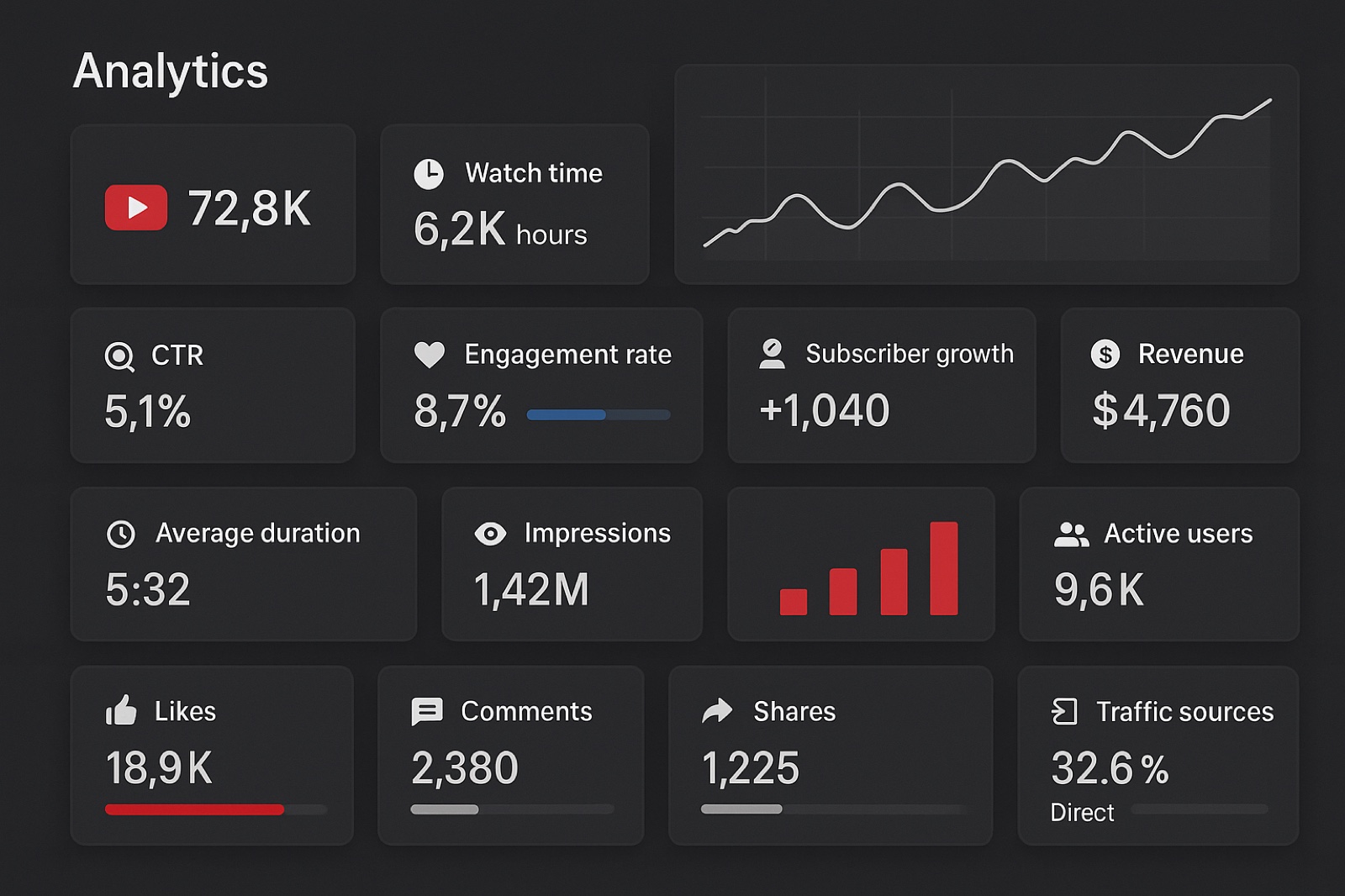
Stop drowning in data. Learn which YouTube analytics metrics actually matter for growth and how to use them to make data-driven decisions.
Quick Answer
If you want better results from YouTube analytics, focus first on packaging quality, then retention quality, and finally consistency of execution. Most channels grow when they improve these three levers in sequence, not in isolation.
Key Takeaways
- Start each video with one clear intent tied to "YouTube analytics" and keep your packaging aligned with that intent.
- Track click-through rate, average view duration, and watch time together. Improving only one metric is rarely enough.
- Use a repeatable weekly workflow: audit, update, test, and document outcomes.
- Link related videos and blog posts so each new upload strengthens your full content ecosystem.
On this page
Introduction: Cutting Through the Noise
YouTube Analytics can be overwhelming. With dozens of metrics available, it's easy to get lost in the data. But here's the truth: only a handful of metrics actually matter for channel growth.
We analyzed data from thousands of successful YouTube channels to identify the 15 metrics that truly drive growth. In this guide, you'll learn which metrics to focus on, why they matter, and how to use them to make data-driven decisions.
Why Most Creators Focus on the Wrong Metrics
Many creators obsess over vanity metrics like total views or subscriber count. While these numbers feel good, they don't tell you much about your channel's health or growth potential.
The metrics that actually matter are those that:
- Influence YouTube's algorithm
- Predict future performance
- Reveal optimization opportunities
- Show audience engagement quality
The 15 Metrics That Actually Matter
1. Click-Through Rate (CTR)
What it is: The percentage of people who click your video when they see it.
Why it matters: CTR is a primary ranking factor. Higher CTR = more impressions = more views.
Target: Aim for 2-10% depending on your niche. Above 5% is excellent.
How to improve: Optimize titles and thumbnails, test variations, analyze what works.
2. Average View Duration
What it is: How long viewers watch your videos on average.
Why it matters: YouTube prioritizes videos that keep viewers watching. Higher duration = better rankings.
Target: Aim for 50%+ of video length. 60%+ is excellent.
How to improve: Improve hooks, maintain pacing, deliver value early, use retention graphs to find drop-off points.
3. Watch Time
What it is: Total minutes viewers spend watching your content.
Why it matters: Watch time is YouTube's primary ranking signal. More watch time = better performance.
Target: Increase month-over-month. Focus on total channel watch time, not just individual videos.
How to improve: Create longer, engaging content, improve retention, publish consistently.
4. Audience Retention
What it is: The percentage of your video viewers watch at each moment.
Why it matters: Shows where viewers drop off, revealing content issues.
Target: Smooth retention curve with minimal drop-offs. Identify and fix problem areas.
How to improve: Analyze retention graphs, improve weak sections, maintain engagement throughout.
5. Impressions Click-Through Rate
What it is: CTR specifically from impressions (when YouTube shows your video).
Why it matters: Shows how well your title and thumbnail perform in search/browse.
Target: 2-5% is good, 5%+ is excellent.
How to improve: A/B test thumbnails and titles, analyze what drives clicks.
6. Traffic Sources
What it is: Where your views come from (search, browse, suggested, external, etc.).
Why it matters: Reveals how discoverable your content is and where to focus optimization.
Target: Diversified sources. Healthy channels get views from multiple sources.
How to improve: Optimize for search if search traffic is low, improve content for suggested videos if browse traffic is low.
7. Subscriber Growth Rate
What it is: How quickly you're gaining subscribers.
Why it matters: Subscribers are your most valuable audience. Growth rate shows channel health.
Target: Consistent growth month-over-month. 5-10% monthly growth is strong.
How to improve: Create subscriber-worthy content, include clear CTAs, deliver consistent value.
8. Engagement Rate
What it is: Likes, comments, shares relative to views.
Why it matters: High engagement signals quality content to YouTube's algorithm.
Target: 3-5% engagement rate (likes + comments / views). Higher is better.
How to improve: Ask questions, respond to comments, create discussion-worthy content.
9. Revenue per Mille (RPM)
What it is: Estimated revenue per 1,000 views.
Why it matters: Shows monetization efficiency. Higher RPM = more revenue from same views.
Target: Varies by niche. $1-5 RPM is typical, $5+ is excellent.
How to improve: Optimize ad placement, target higher-value niches, improve audience demographics.
10. Best Performing Videos
What it is: Your top videos by watch time, views, or engagement.
Why it matters: Reveals what content resonates with your audience.
Target: Identify patterns in top performers and replicate them.
How to improve: Analyze top videos, identify common elements, create similar content.
11. Worst Performing Videos
What it is: Your lowest-performing videos.
Why it matters: Shows what doesn't work, helping you avoid mistakes.
Target: Understand why they failed and avoid repeating those patterns.
How to improve: Analyze failures, identify common issues, learn from mistakes.
12. Audience Demographics
What it is: Age, gender, location of your viewers.
Why it matters: Helps you understand your audience and create targeted content.
Target: Clear demographic profile that matches your content strategy.
How to improve: Create content that appeals to your core demographics, adjust strategy if needed.
13. Top Traffic Sources
What it is: Specific sources driving most traffic (specific search terms, external sites, etc.).
Why it matters: Reveals where to focus optimization efforts.
Target: Identify high-value traffic sources and optimize for them.
How to improve: Double down on what works, optimize for top search terms, build relationships with top external sources.
14. Subscriber Views vs. Non-Subscriber Views
What it is: Percentage of views from subscribers vs. non-subscribers.
Why it matters: Shows if you're growing your audience or just serving existing subscribers.
Target: 30-50% subscriber views is healthy. Too high means you're not growing; too low means subscribers aren't engaged.
How to improve: Balance content for both audiences, optimize for discovery if subscriber views are too high.
15. Video Performance Trends
What it is: How your videos perform over time (improving, declining, stable).
Why it matters: Shows if your content strategy is working long-term.
Target: Upward trend in key metrics over time.
How to improve: Track trends, identify what's working, adjust strategy based on data.
Metrics to Ignore (Most of the Time)
These metrics feel important but often don't drive growth:
- Total Views: Vanity metric. Focus on watch time instead.
- Subscriber Count: Less important than subscriber engagement and growth rate.
- Likes Count: Engagement rate is more meaningful than raw likes.
- Comments Count: Quality and engagement rate matter more than quantity.
How to Use These Metrics
Here's a practical framework for using these metrics:
- Weekly Review: Check CTR, view duration, and engagement rate weekly
- Monthly Deep Dive: Analyze traffic sources, top/bottom performers, and trends monthly
- Quarterly Strategy: Review long-term trends and adjust content strategy quarterly
- Continuous Optimization: Use metrics to guide every content decision
Viewera's advanced analytics dashboard makes it easy to track all these metrics in one place, with insights and recommendations to help you optimize your channel.
Creating a Metrics Dashboard
Set up a dashboard focusing on these 15 metrics:
- Group related metrics together
- Set targets for each metric
- Track progress over time
- Identify correlations between metrics
- Make data-driven decisions based on trends
Common Analytics Mistakes
- Focusing on Vanity Metrics: Total views feel good but don't drive growth
- Ignoring Trends: One-time metrics are less valuable than trends
- Not Acting on Data: Analytics are useless if you don't make changes
- Over-Analyzing: Don't get paralyzed by data. Focus on actionable insights
- Comparing to Others: Focus on your own trends, not competitor comparisons
Conclusion: Metrics as Your Growth Compass
These 15 metrics are your compass for YouTube growth. By focusing on what actually matters and ignoring vanity metrics, you can make data-driven decisions that accelerate your channel's growth.
Remember: Metrics are tools, not goals. Use them to understand your audience, optimize your content, and make better decisions. But don't let metrics become an obsession. Great content will always be the foundation of success.
Ready to master YouTube analytics? Try Viewera and get access to advanced analytics, insights generation, and data-driven recommendations that help you grow faster.
Frequently Asked Questions
What is the fastest way to improve YouTube analytics?
Improve your title-thumbnail promise and the first 30 seconds of the video first. This usually creates the biggest early lift in both CTR and retention.
How often should I review analytics for YouTube analytics?
Review core metrics weekly and run a deeper content-level analysis monthly. This gives enough data to spot patterns without overreacting to noise.
Can I use AI tools without losing content quality?
Yes. Use AI for ideation, structure, and optimization support, but keep the final narrative, examples, and voice aligned to your audience and expertise.
Related Articles
How to Read YouTube Analytics: A Creator's Guide to Data-Driven Decisions
YouTube analytics can be overwhelming. This step-by-step guide teaches you how to read and interpret your data to make better content decisions.

YouTube Shorts Analytics: How to Grow Your Shorts Channel in 2025
Shorts require different strategies than long-form content. Learn how to use Shorts analytics to grow your channel and maximize engagement.
The Complete YouTube SEO Guide for 2025: Rank Higher and Get More Views
Learn the latest YouTube SEO techniques that actually work. We analyzed 10,000+ videos to create this comprehensive guide covering titles, descriptions, tags, thumbnails, and analytics.
Ready to Optimize Your YouTube Channel?
Viewera gives you clear analytics, SEO optimization tools, and content insights to help you grow your channel.
Start Free Trial